

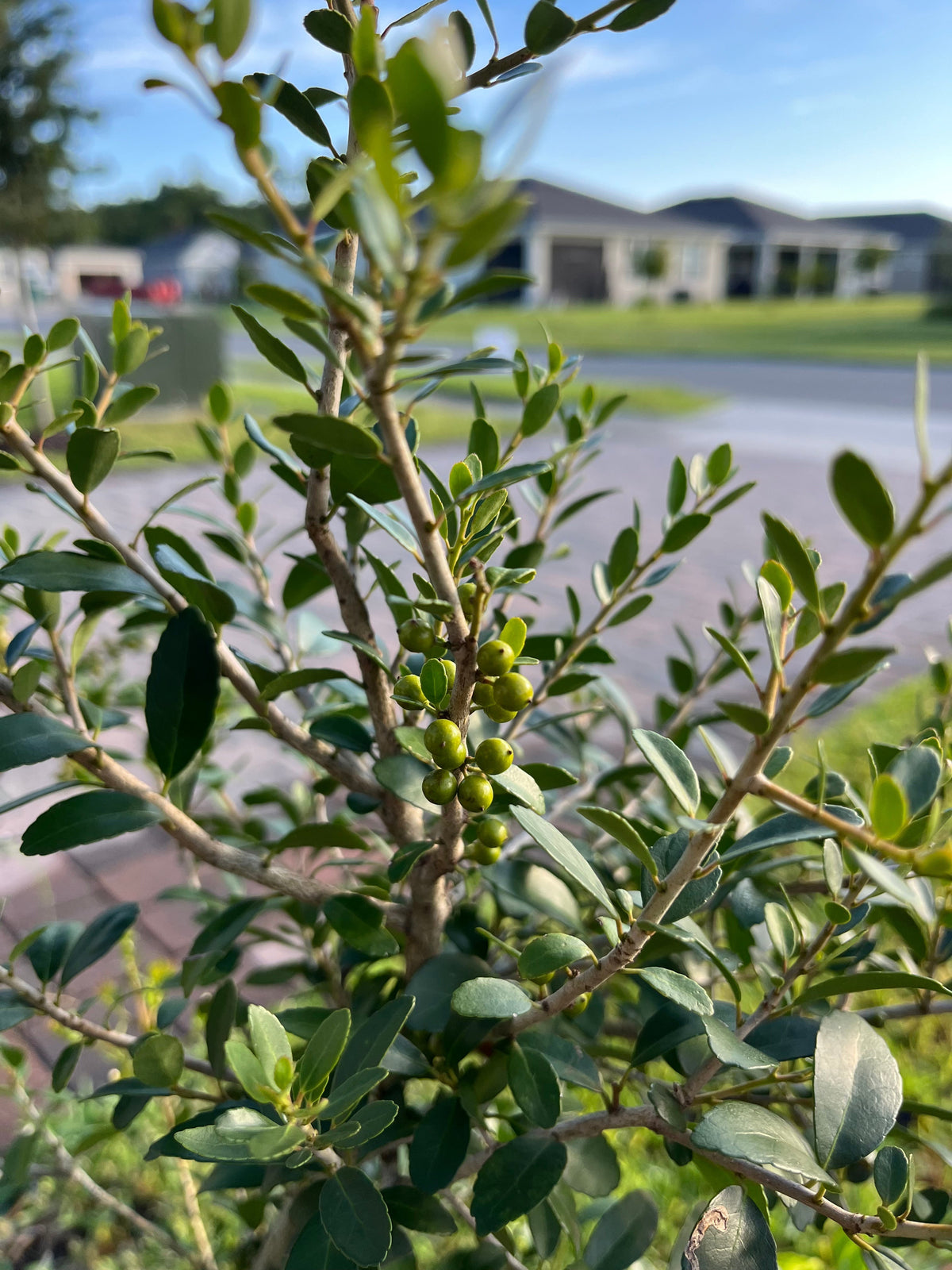
One of the questions we get most often at Rise Yaupon is, “I have a yaupon holly in my yard. Can I use it to make tea?”
The short answer is yes.
If it is truly yaupon holly, the leaves can be used to make tea. But there are a few things you should know before you start stripping the leaves off the plant in your front yard. If you are unsure if it's yaupon - reach out to us with a picture and we can confirm for you!
One of the things that makes yaupon so interesting is that there are many different forms of the plant. Some grow naturally in the wild, while others have been intentionally cultivated for landscaping. These are called cultivars. The University of Florida led a lot of the work to make cultivars of yaupon for the specific purpose of landscaping.
At Rise Yaupon, we wild-harvest the yaupon that goes into our teas from prestine, never-been-touched Florida forests. But we are also big believers in getting more yaupon into people's yards, gardens and landscapes. There is no reason a beautiful native landscape plant can't also provide you with a source of tea. Native, edible yard? We're here for it!
What Is a Yaupon Cultivar?
A cultivar is essentially a cultivated variety of a plant that has been selected for particular growth characteristics.
When it comes to yaupon holly, many of the plants you see at garden centers or planted by landscapers are cultivars. They have been selected because they have particular growth habits or appearances that make them desirable for landscaping.
If you live on a wooded property and have yaupon growing naturally among the trees, chances are you're looking at wild yaupon rather than a landscape cultivar. That's the type of yaupon we typically harvest at Rise Yaupon.
Yaupon is an especially advantageous plant for landscaping because it is native to the Southeastern United States and is incredibly well adapted to our environment.
It can tolerate:
- Full sun
- Full shade
- A wide range of soil conditions
- Drought
- Flooding
- Freezing temperatures
- Salt and coastal conditions
The one major caveat is that yaupon generally doesn't like to have wet feet. It prefers well-draining soil.
That adaptability makes yaupon an excellent choice for landscaping, and the University of Florida has helped develop different yaupon cultivars specifically for landscape use.
What Are Some Common Yaupon Cultivars?
There are several different cultivars, and one of the fun things about yaupon is that you can find one that fits almost any landscape.
Dwarf or Schilling Yaupon
The dwarf, or Schilling, yaupon is a low-growing form that is often used as a hedge or ornamental plant.

Think of it as filling a similar role that boxwood might fill in landscapes farther north. It stays relatively compact and can create a nice, structured appearance, or plant them together and they'll grow together to form a hedge.
One thing to keep in mind if you're thinking about harvesting it for tea is that the leaves can be quite small. That doesn't mean you can't make tea from them. It just means you're going to have to harvest a lot more leaves to get the same amount of tea.

Sky Pencil Yaupon
Sky Pencil is a beautiful choice when you want to add height to a landscape.
Instead of spreading outward, the branches grow more vertically, giving the plant a narrow, upright appearance. It can make a really nice architectural element in a garden or landscape.
And yes, those leaves can also be used to make tea.
Weeping or Pendula Yaupon
Then you have the weeping, or pendula, forms of yaupon.
These have branches that grow downward, creating a completely different look. They can also be loaded with berries, which makes them particularly attractive if you enjoy having birds in your yard.

Again, the leaves can be harvested for tea. Leave berries for birds.

The important thing to remember is that the plant may look very different depending on the cultivar, but if you're working with actual yaupon holly, the leaves can still be used to make yaupon tea.
Can You Make Tea From a Yaupon Cultivar?
Yes.
This is probably the most important thing I want people to take away from this article.
If you have a yaupon cultivar growing in your yard, you absolutely can use the leaves to make tea.
We have years of experience working with yaupon at Rise Yaupon, and from a taste perspective, there isn't some magical difference that makes wild yaupon suitable for tea while a cultivar isn't.
The leaf is still yaupon.
All of these different cultivars can produce a really nice, smooth-tasting tea.
The biggest difference you'll notice isn't necessarily in the flavor. It's in the amount of work required to harvest the leaves.
At Rise Yaupon, our harvesters are paid by weight. Because some cultivars, particularly smaller-leaf varieties like Schilling, produce smaller leaves, it can take considerably more labor to collect the same weight of material.
For a commercial operation, that makes wild yaupon much more practical.
Our yaupon is wild harvested from pristine Florida forests, and that's the source we choose for our teas.
 But if you're doing this as a DIY project at home, you don't have to worry about getting a certain cultivar. Choose the yaupon that works best for your landscape and enjoy the fact that you're growing your own source of tea.
The Most Important Thing: Know Where Your Yaupon Came From
This is where I would encourage people to slow down before harvesting.
Just because you see a yaupon plant doesn't mean you should automatically start picking the leaves and making tea.
If the yaupon is growing in a wooded area on your property and you know that the land hasn't been treated with herbicides, pesticides or other chemicals, that's a very different situation from a manicured landscape.
Think about what your yard has been exposed to.
If you have a carefully maintained lawn where weed control products are regularly applied, those chemicals could potentially affect plants growing nearby, including your yaupon.
The same thing applies to yaupon growing around commercial buildings, public spaces or other landscaped areas. You may not know what has been applied to the plant or the surrounding soil.

Real yaupon hedge on the edge of a parking lot in our local community.
If you don't control the landscape and don't know its history, I wouldn't harvest those leaves for consumption.
For a DIY tea project, you want to know exactly where your leaves came from.
Only Harvest the Leaves
Another important point for anyone making DIY yaupon tea is that you want the leaves, not the berries.
Yaupon produces berries, and they can be abundant on some cultivars, especially the weeping varieties.
When you're harvesting for tea, stick to the leaves.
Don't make your DIY tea with the berries. Leave berries for migratory birds.
How to Harvest Yaupon for Tea
If you've determined that you have a safe source of yaupon, harvesting is pretty straightforward.
One thing I always tell people is that you're not just picking leaves. You're also pruning your plant.
If you simply strip every leaf off a branch and leave that branch sitting there, you can end up with a bare branch that doesn't regenerate the way you'd like.
Instead, clip the branch as you're harvesting.

That encourages the plant to produce new growth and helps maintain the overall health and appearance of the tree or shrub. Often the new growth will come in with a red tint - this is a great sign that your tree is healthy.
In other words, harvesting can actually become part of your regular pruning routine.
How to Wash and Dry Yaupon Leaves
Remember, these leaves have been growing outside.
They're exposed to dirt, dust, insects, birds and all the other things that naturally exist outdoors.
So wash them.
At home, I simply put my freshly harvested leaves in a colander and rinse them under the kitchen sink. You don't need to make this complicated. The goal is to get the dirt, grime and whatever else may have gotten onto the leaves while they were outside off the plant.
Once they're washed, it's time to dry them.
At Rise Yaupon, we don't use heat to dry our leaves. We air-dry them instead. Our America's Classic blend is pure yaupon - just air dried leaves ground and then put into teabags.
You can use an herb-drying rack or anything that allows good airflow around the leaves. At home, I've even used a pizza pan with holes in the bottom.
Spread the leaves out and leave them on the counter. Every day or so, turn them over so that they dry evenly.
How do you know when they're ready?
Fold a leaf in half.
If it bends, it's not ready.
If it crunches, it's dry.
You want the leaves to be completely dry before you store them. Any remaining moisture can cause problems with your tea over time.
Can You Use an Oven to Dry Yaupon?
If you don't want to wait a couple of days for your leaves to air-dry, you can use a convection oven.
Set your oven to its lowest temperature and put the leaves in for approximately five to ten minutes. Keep an eye on them and turn them as needed.
Again, the test is simple: fold the leaf. It should crunch.
You don't want soft spots or residual moisture.
But there is an important difference between air-drying and heat-drying.
Heat changes the flavor profile.
Air-dried yaupon tends to have a flavor profile that's more reminiscent of green tea, while heating the leaves gives the tea a deeper flavor that is more similar to a black tea.
Neither is necessarily right or wrong. It's really a matter of what you prefer.
How Much Yaupon Do You Need to Make Tea?
This is another question we hear frequently.
How many leaves do I need for one cup of tea?
Our recommendation is to start with about two large handfuls of fresh leaves.
That might sound like a lot, but you're going to lose quite a bit of weight during the drying process. Once you grind the dried leaves, the volume will decrease again.
Two large handfuls gives you a good starting point for your first batch.
From there, you can adjust the amount based on how strong you like your tea.
How to Prepare Your Dried Yaupon
Once your leaves are completely dry, you can grind them.
I use a food processor to break the leaves down into smaller pieces.
The more finely you grind the leaves, the more surface area is exposed to the hot water. More surface area means you can extract more of the tea from the leaves and make a stronger cup.
Once you've processed your yaupon, store it in a cool, dry place.
And then you're ready to make tea.
Should You Grow Yaupon Specifically to Make Tea?
Absolutely.
We would love to see more people planting yaupon in their yards.
The more people understand yaupon, the better. Not only can you enjoy it yourself, but you can help introduce your friends, family and neighbors to a plant that most people don't even realize is naturally caffeinated and can be used to make tea.
And with so many different cultivars available, there's really something for everyone.
And if you're interested in creating an edible landscape, having a plant that provides you with your own natural source of caffeine is a pretty cool bonus.
The Reality of Making Your Own Yaupon Tea
I'll be honest with you: making your own yaupon tea is work.
Harvesting takes time. Washing takes time. Drying takes time. Grinding takes time.
We've had plenty of people try making their own yaupon tea, and they'll often do it once or twice before coming back to Rise Yaupon.
Not because their homemade tea wasn't good. It was simply a lot easier to buy a pouch of yaupon that's already been harvested, processed and packaged into ready-to-use tea bags.
But that's part of what makes DIY yaupon so much fun.
You get to walk outside, harvest a plant that is growing right in your own yard, process it yourself and eventually sit down with a cup of tea that you made from start to finish.
There's something pretty satisfying about that.
Yaupon Belongs in More Backyards
At Rise Yaupon, our business is built around wild-harvested yaupon. We love the forests where our yaupon grows, and we love the process of turning those leaves into the tea that people drink every day.
But we also believe yaupon deserves a much bigger place in American landscapes.
It's native. It's incredibly adaptable. It can be beautiful. It provides habitat and food for wildlife. And yes, if you choose the right plant and know that it hasn't been exposed to harmful chemicals, you can harvest the leaves and make your own tea.
So the next time you're at a garden center and see a yaupon cultivar, don't just think of it as another ornamental shrub.
You might be looking at your next cup of tea.

Leave a comment
This site is protected by hCaptcha and the hCaptcha Privacy Policy and Terms of Service apply.